
As one of the oldest communities on earth, Japan has endured natural disasters, wars, and the ups and downs of a global economy. Some politicians here worry about the impact of a large immigrant population on the core culture. But the Blip Generation is what might actually be this society’s undoing.
The Blip Generation
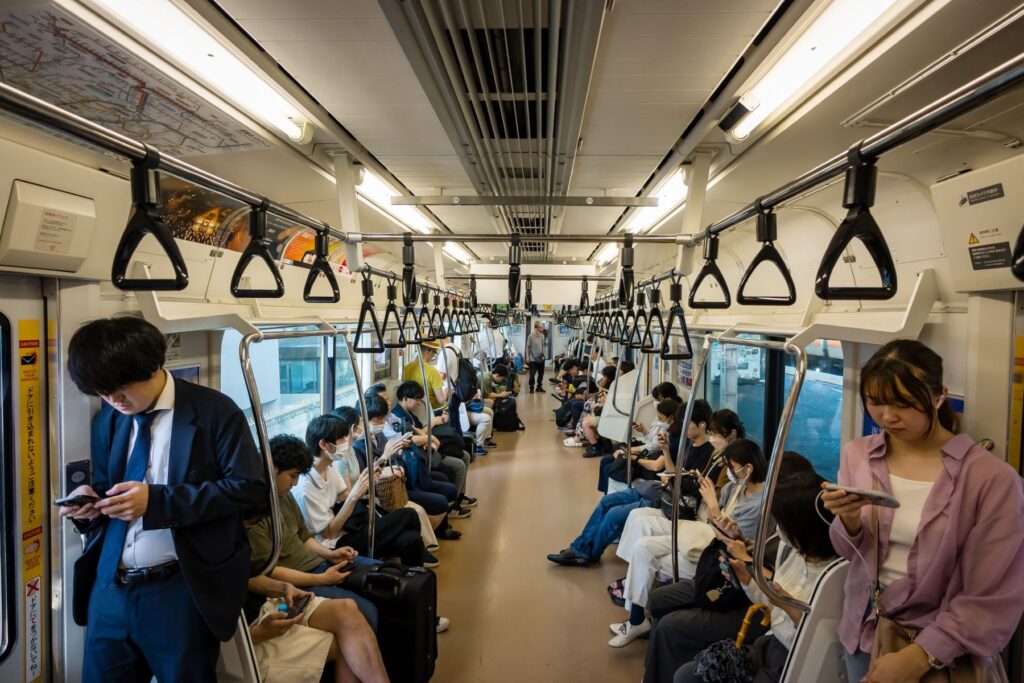
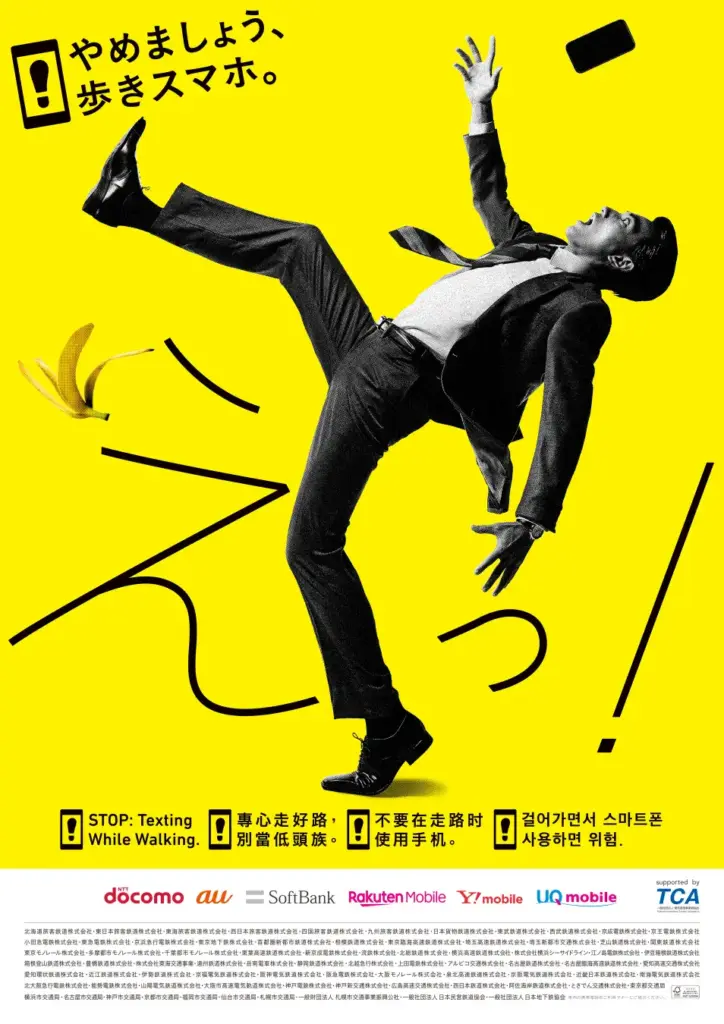
The Blip Generation includes anyone, mostly born since the turn of the century, who is drawn to the siren song of fast and glitzy content transmitted through cell phones and other connected devices. You see these oblivions zigzagging through train stations or on public sidewalks, their eyes transfixed by the glowing, rectangular, handheld abyss of their one true love. The content is so compelling that train companies and mobile providers must post “Smartphone Walking” (歩きスマホ) warning signs to prevent these hypnotized drones from wandering onto the tracks.
The allure is especially strong for those just getting their first taste of online media. Earlier today while riding a local train, I witnessed a toddler screaming his heart out and pounding his little fists on mommy and daddy’s laps. He was well on his way to a full-scale tantrum, but his parents were able to diffuse the situation by thrusting a cell phone in front of this Edvard Munch life model. I would call this a Pavlovian response, but would that refer to the kid or the parents?
Any challenge to this media wonder-drug is sure to be met with a grumpy “OK, Boomer” and a side-eye quick enough to jump right back into the on-screen action. If the concern were only that old folks like me didn’t understand the latest tech or entertainment styles, that would be fine. But there are real societal dangers coming from this endless doom-scrolling.
One well-documented social peril is the escape from relationships and other meaningful pursuits that these devices offer. Consumption of books and other long-form documents has declined as attention spans shorten. Recent research also suggests a link between the “technology shock” that followed the introduction of the iPhone in 2007 and the drop in birth rates that has been besetting populations worldwide. Not only are these devices a time-suck, but they offer easy access to images your mom doesn’t want you looking at, not to mention the glorification of an exciting, self-focused, product-filled lifestyle that pushes viewers toward themselves.
The Message is Also the Message
As concerning as this loss of human intimacy is, there is a greater danger that directly threatens core pillars of Japan’s culture and those of societies around the world. With all due deference to Marshall McLuhan and his quip that “the medium is the message,” the message itself can also be quite troubling. You often hear the complaint that digital content, especially video presented through an infinity scroll, is highly addictive, and the dopamine hit that comes from regular viewing is certainly a concern. But the content itself has just as much impact on the social harmony that Japan values so much. This is because…
- the content is passive,
- the content is shallow,
- the content is region-agnostic, and
- the content is endless.
Passive content requires little from the consumer beyond opening their sense organs and taking it all in. In the competition between being a devourer of media and providing productive support to society, consumption easily wins because it takes so little effort.
The shallow nature of the content means that there is limited call for analysis, little need or desire to dig deeper. And why would you, since there is often nothing to dig for. While there is content that enriches, the bulk of what gets absorbed today falls into the entertainment domain. Entertainment is not inherently problematic, but as with sugar, if it is the only thing you are consuming, your health will suffer.
The region-agnostic aspect of the content is perhaps the most vexing. Thanks to platforms like Instagram and TikTok, anyone looking for a media fix has the entire planet’s electronic resources at their disposal. This is the key consideration for Japan, since not all international messaging is compatible with a traditional understanding of Japan’s social harmony. This is not to say that foreign ideas are dangerous; as an immigrant, I am very comfortable with importing truly useful ideals from beyond a country’s borders. But not all ideas are created equal, and if you are already primed to allow any and all viewpoints to flow through your frontal cortex without scrutiny, some things previously categorized as heretical are going to seep broadly and quickly into an entire cohort of Japanese society.
Finally, there’s the endless nature of the content, making solutions difficult. Even if Japan opted to restrict certain collections of content, something else would simply pop-up hydra-like to take its place.
Where to Go from Here
The cynic in me says it is already too late for the current generation of video-feed gawkers. If Japan wants to blunt the progress of the Blip Generation, it will need to act assertively and decisively. The most likely vehicle for reform is the education system, but at this time it is unclear what types of changes and messaging should be imparted to make a difference. A first step would be to soberly reflect on the role of technology in education.
A 2025 report by NHK summarized concerns voiced by parents and experts on the pandemic-era rollout of tablets to schoolchildren. Even if these glass slates are to remain, the content they transmit to young learners should push for active engagement from students, communicate thought-provoking information, be sensitive to regional (Japanese) concerns, and be provided in limited doses.
Image Credits: JR East, Valent Lau/Pexels