Unless you’ve been living under a rock or you truly don’t care about problems that plague modern societies, you likely already know that JR East is “graduating” the penguin mascot used for their Suica payment cards, replacing it with a purple something-something. The departing waterfowl was a familiar and beloved character inked by artist Sakazaki Chiharu and associated forever with the travel brand since its introduction a quarter-century ago.
Or so we thought. It turns out that even in Japan, a country that is in many ways the very definition of tradition and stability, long-established systems sometimes get the boot.
Goodbye Penguin, Hello…
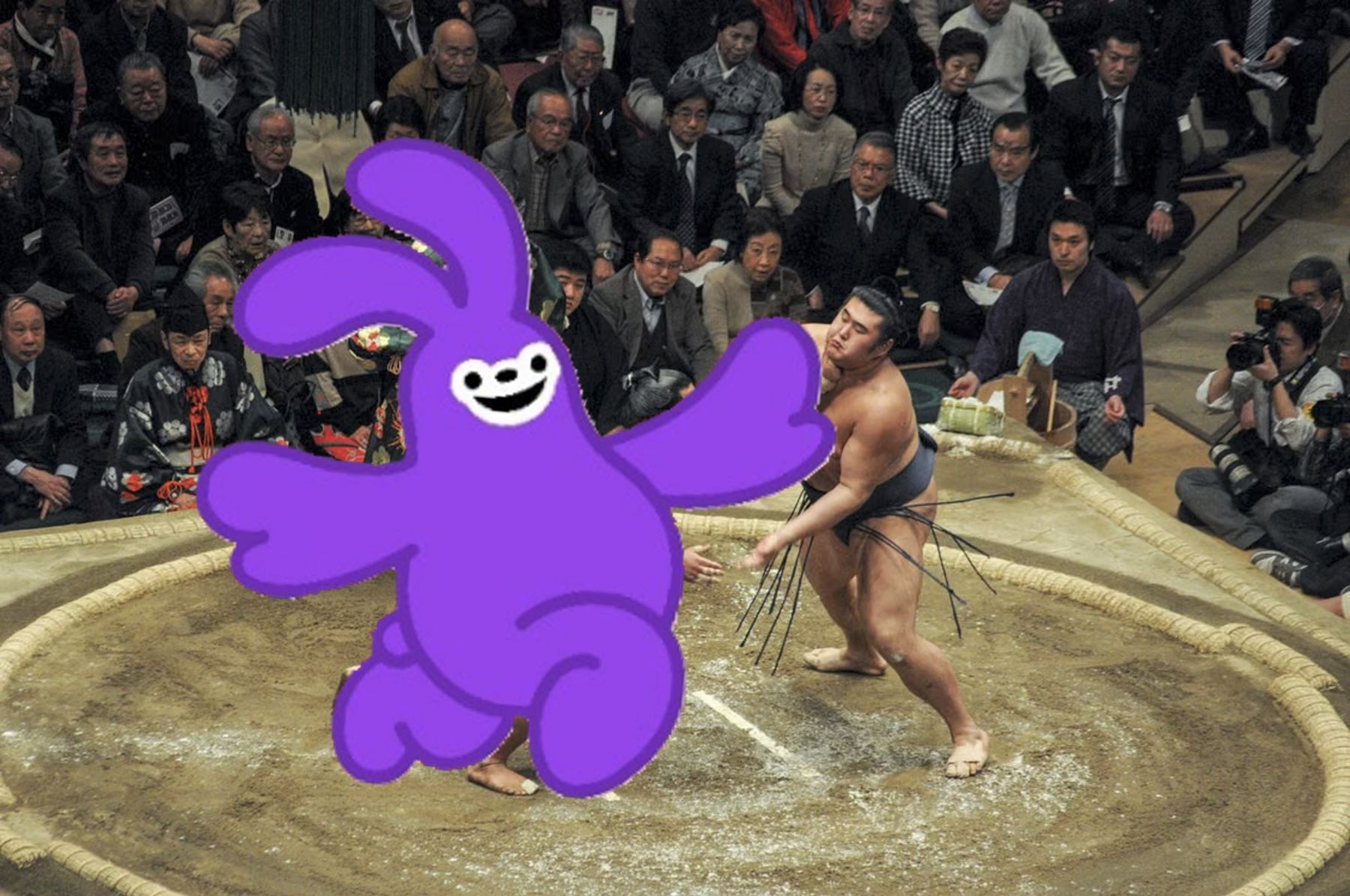
Thanks to competition from other cashless platforms like PayPay and NTT Docomo’s dBarai, JR needed to step up its tap-to-pay game. Its “Suica Renaissance” plan seeks to fully revamp its payment tools by 2034. This vision necessitated the replacement of its aging spokes-bird, it seems, to a creature that does not yet have a defined species. The new magenta mascot jumped from the drawing board of Seto Hiroaki, whose website announces his style as “Cartoon meets Satire—bold, humorous, and sharp.”
It is no satire to point out that many are not happy with the change. “Creepy” is a word that kept popping up in online searches, and you can easily find AI-generated imagery of the new brand ambassador hovering menacingly in a dark corner while a naïve penguin waddles past. Others have compared the new figure with Grimace, a rotund grape-hued McDonalds advertising tool that horrified innocent children for decades. Also, the Teletubbies. Still, the new “image character” earned more than 800,000 votes in JR’s online selection competition, beating out two other orangish competitors.
The public will get another chance to weigh in on the character update. Between now and December 15, JR East is soliciting nicknames for that thing on its web site. Personally, I’m pushing for Suica McSuicaface.
Business Has Changed, Japan Has Changed
This is not how things would have been done twenty-five years ago. In his book, Suica Will Change the World (Suicaが世界を変える), Shiibashi Akio described how his team developed the Suica system, starting from its core electronic components and building up to its goal of payment dominance. One thing that is clear in the book is that JR designed, engineered, and implemented the entire system, with support from other electronic giants and transportation groups. You were not consulted.

The development responsibility extended to the physical payment card and its flightless representative. The public was not asked for its opinion in what should adorn the card. On the contrary, the use of the penguin was spearheaded by Tanaka Tomotomo, part of the artistic team at Dentsu, one of JR’s partners. In a 2014 interview, Tanaka identified “my senior art director” as the person who recommended using Sakazaki’s cute children’s book character as a product element.
I don’t know why Mr. Tanaka chose to withhold that art director’s name, but it wouldn’t have mattered. As the person in charge, Tanaka, and in reality the JR organization that brought Dentsu into the design process, would have ultimate responsibility for obtaining and deciding on what image to use. Plans of this magnitude were top-down in Japan, not left to the whims of the masses.
But that’s not the case anymore. Decisions formally relegated to the boardroom are now open to consumer involvement. I would expect this behavior in the United States, where customers are not afraid to use a company’s suggestion box to dictate terms. JR East could have skipped the online voting step and forced its new favorite mascot on an unsuspecting public, but it didn’t. Thus, even hierarchical Japan Inc felt the need to bring its customer base into the design process.
I expect that back in the penguin era—the Golden Age—JR performed some external polling to ensure their logo didn’t fall flat. But it wasn’t as open source as in this instance. I’m not saying that the purple monster represents a complete handover of control to the vox populi. JR East still limited the universe of icons to three company-approved choices. And despite some strong opposition to the new periwinkle phantasm, all of JR’s decisions are final. But that it took a detour through the hoi polloi at all is telling.
Japan’s Sumo-level Flexibility
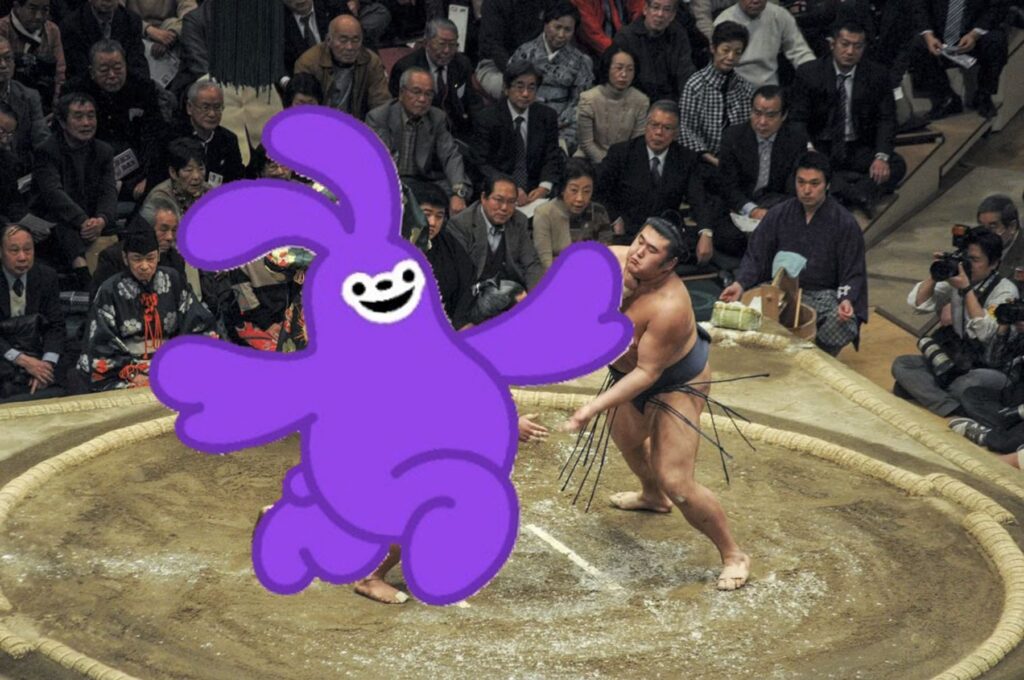
Japan has engaged in such transformations toward openness before. Back in 1993, the rise of the Hawaii-born sumo wrestler Akebono to the rank of yokozuna, the sport’s highest rank, caused quite a stir. Just one year earlier, another Hawaiian rikishi, Konishiki, gave a yokozuna-level performance, but was denied the title. When Akebono did the same thing a year later, the Japan Sumo Association had to grapple with what it meant to be Japanese versus what it meant to be a sumo competitor. Akebono was ultimately lifted to the grand champion rank.
JR wasn’t under the same pressure to change its ways. But if it had imposed this new lavender logo on the payment system without warning, the populace might have rebelled or at least looked to more eye-friendly alternatives. By putting the selection process partially in the hands of ordinary residents, it shared ownership of the decision. For a society with a history of distinct task boundaries, this is a dramatic change.
As Japan grapples with demographic and economic impacts over the next few decades, it will encounter similar situations begging for more flexibility and openness. Sometimes adherence to tradition will be the right choice. But in other cases, it will need to grab that mauve-colored opportunity by both ears and ride it into the future.
Image Credits: JR East; Artem Zhukov/pexels