


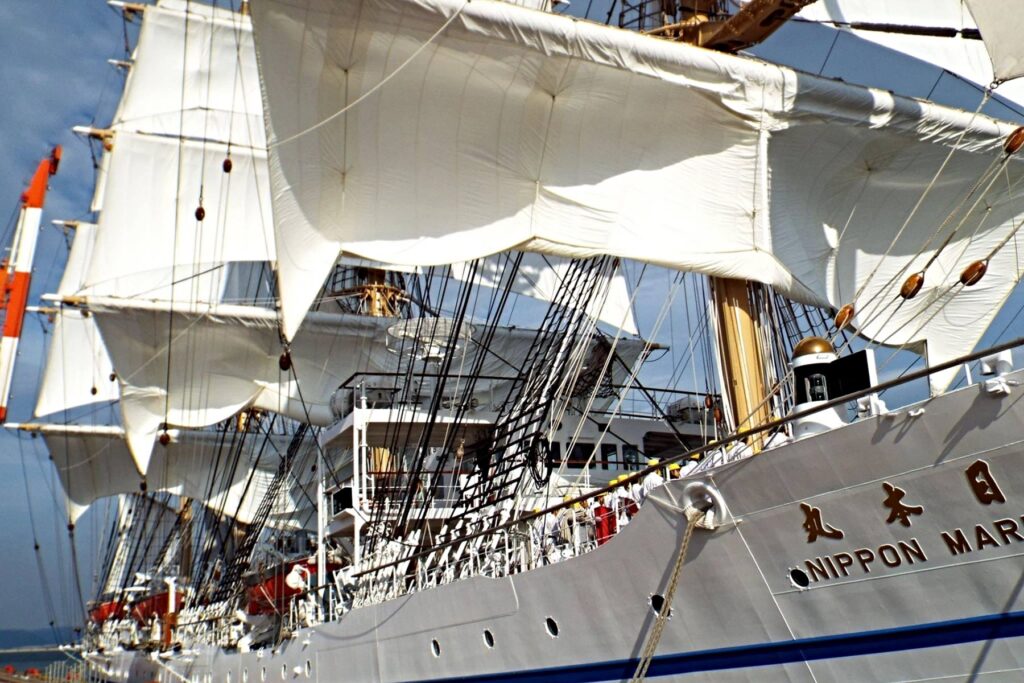
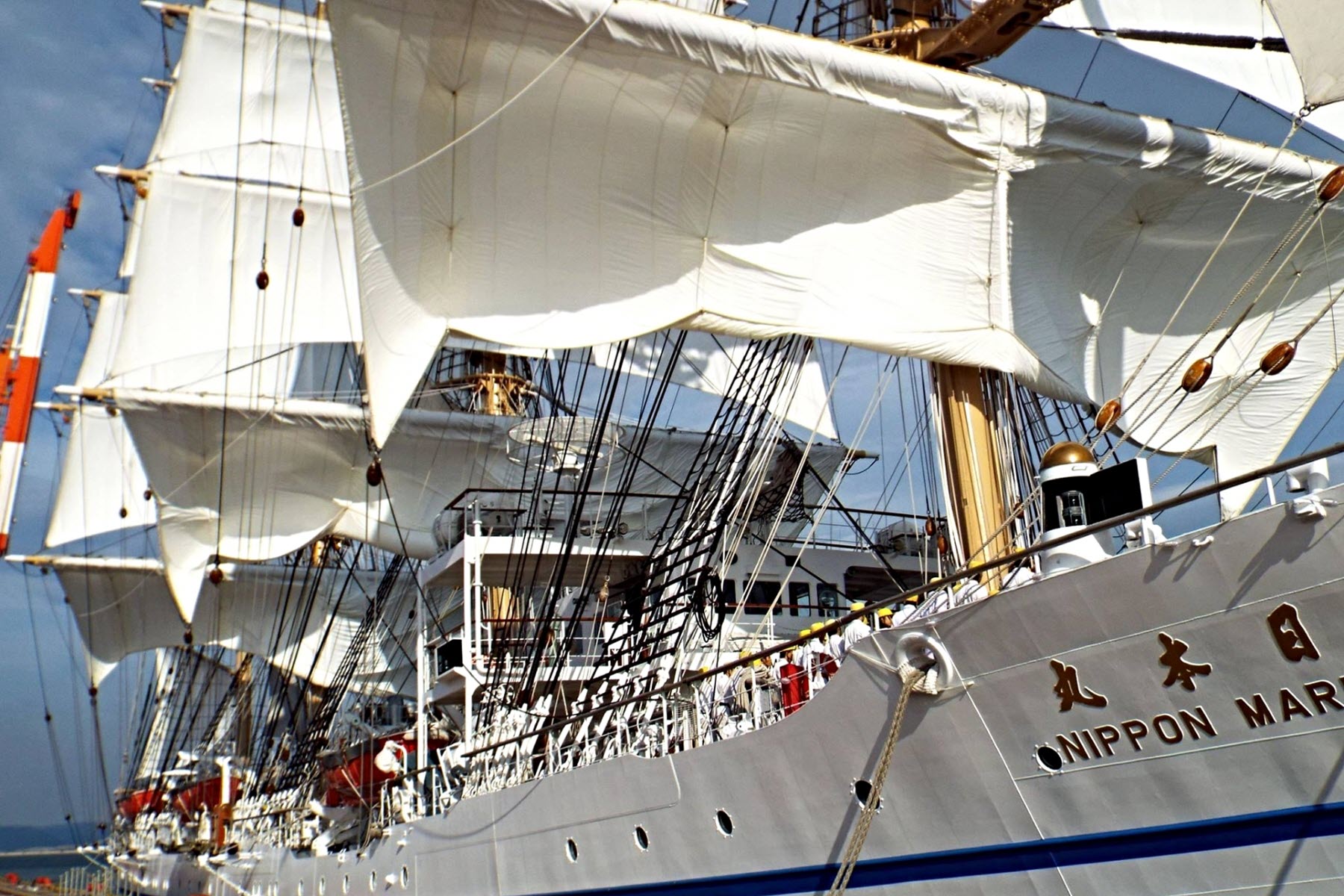
Japan’s identity as a culture and a society is unique in this world, thanks in part to its remote island location. When combined with the seventeenth-century policy of sakoku, which officially closed off the nation to foreigners for more than two centuries, Japan had a lot of time to hone its self-identity. Its physical separation from the world allowed it to establish a system of norms, customs, and expectations that make it a distinctive place to visit and live.
That isolation came to an abrupt end with the arrival of the “Black Ships” (kuro fune) into Edo Bay on July 8, 1853. Commodore Matthew Perry led the American expedition, sailing brute force toward the Japanese capital with four steam-powered warships belching black smoke, plus an array of support ships. From his office on the USS Susquehanna, Perry strongly urged the Tokugawa Shogunate to enter into treaty negotiations with the Western powers, expecting a positive answer the following spring.
This intrusion was not Japan’s first engagement with foreigners. Even when the country was officially closed for business, the Dutch continued to trade through specific ports, as did the various Asian kingdoms. And Perry’s was not the first American ship to be received at a Japanese harbor, but it was the first one to dramatically alter the nation’s trajectory. The Convention of Kanagawa, a treaty signed between Japan and the United States at the end of March 1854, not only halted Japan’s policy of seclusion, but it also initiated broad societal, governmental, and diplomatic changes that transformed Japan from a lone wolf on the edge of the world into a key global power. In the century and a half that followed, Japan’s citizens changed from humble farmers and merchants into manufacturing and technology masterminds who in turn impacted every nation on earth.
Despite the initial embarrassment at being forced to acquiesce to Western demands, Japan came to view its opening as fortuitous. Through the subsequent Meiji Restoration and transformation into a manufacturing and economic power, Japan quickly earned respect on the world stage. But it wasn’t easy. Even ignoring the trauma of World War II, the impact on daily life for ordinary residents was immense. There were new languages to learn, foreign ways to ingest, new expectations to deal with. But these changes were nothing compared to the repercussions on Japanese identity. Before Perry’s sailing ships arrived, Japan was the source of the rising sun, the land whose leaders descended directly from the sun goddess herself. Now it was just one of the world’s many nations, and by comparison not all that powerful.
Today, Japan is grappling with the impact of another sailing vessel: the Ship of Theseus. Unlike Perry’s very real nineteenth century frigate, the Ship of Theseus is a philosophical thought experiment about a vessel that is slowly repaired year by year until every single one of its original components has been replaced. In such a scenario, where none of the ship’s original parts remain, can the boat still be identified legitimately as the true Ship of Theseus?
This slow maritime upgrade can be applied directly to Japan’s immigration situation. The country’s foreign-born population has grown quickly in recent years and is expected to reach 10% of all residents by 2070. While a portion of this group will stay here and do business for just a few years before moving on, many are establishing permanent residency and even acquiring Japanese citizenship, their children growing up in settings identical to their native-Japanese classmates. With the majority ethnic population in numeric decline, these new immigrants have come to resemble the replacement parts being applied to the Ship of Theses.
As the ranks of Japanese passport holders become increasingly mixed from a genetic perspective, will Japan’s original Ship of Theseus remain the same? Will that thing known as Japanese identity persist even when many or all of its parts have been swapped out for new-fangled editions?
For hard-core philosophers, the Ship of Theseus is a conundrum, with several metaphysical paradoxes screaming for attention. But for ordinary folk, this is a no-brainer. The upgraded boat is, of course, the same transport, since it is brain-wielding humans and not chunks of wood and iron that are making the determination about identity.
We only need to look to our own physical bodies to understand this reality. While some of the 30 trillion cells in our bodies endure for decades, on average the full count of cells is swapped out and replaced with new versions about four times per year. Would anyone claim that their identity has been completely discarded and replaced with something entirely new every three months?
Of course, Japan shouldn’t be cavalier about its identity. If the shipwrights repairing the Ship of Theseus slapped damaged or rotten planks on the existing schooner willy-nilly, that majestic vessel would quickly sink into the sea. Replacement parts should be added to the ship with care. If new components are incorporated into the whole with the health of the entire ship in mind, there is little reason to agonize over these shiny new units.
Image Credits: jugoinoge/photo-ac


