


Japan, it turns out, has lots of paperwork. Citizens are somehow able to jet right past the formalities, be they printed forms in triplicate or nineties-era web pages. For locals, this is the realm of the possible, a world of mundane tasks that pose few difficulties. But for newcomers to this nation, especially those of us who arrived as adults with dreams of success, there are days—years!— where none of it seems remotely possible. Even something as simple as a name field on a form can impede us, with our ludicrously long, multipart appellations that are impossible to transliterate into kanji. These afflictions often come as a complete surprise to those asking us to fill out such documentation, given that the procedures work seamlessly every single time for those who grew up here.
Yet once in a while, the opposite happens, and things that are supposedly impossible for mere Japanese mortals to accomplish become trifles, even for those who have mediocre Japanese language skills. Take my recent move from Yokohama to Tokyo as a key example. That shift included a passenger vehicle, an old Subaru sedan if you must know. Back in America, there are entire hospital trauma units devoted to those who have recently visited a Department of Motor Vehicles, so I was prepared for trouble.
DMV offices in the United States, though an irritation, nonetheless function as a one-stop shop for everything related to driving. Apart from smog checks and other physical inspections, procedures for updating your driver’s license, your car’s license plate, and all the accompanying taxes and fees are usually taken care of in one building. Not so in Japan. Here are the procedures that awaited me in Tokyo.
- Get residency certificate copies with new address (City Hall)
- Update driver’s license address (Police Department)
- Get parking-space permission document (Condominium Management Office)
- Apply for a government-issued parking pass (Police Department)
- Update shaken car registration address (Land Transport Office)
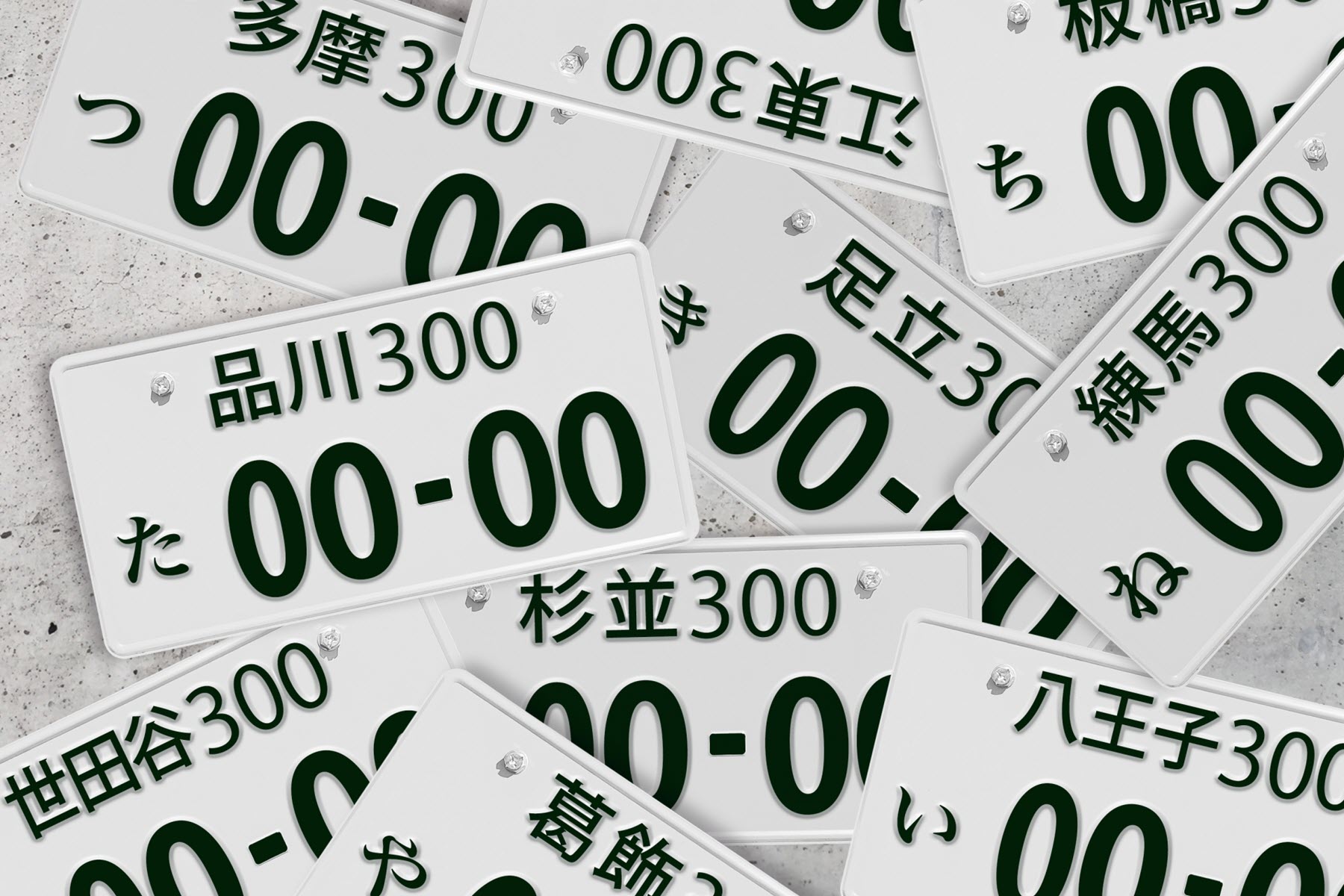
- Apply for replacement license plate (Land Transport Office)
- Update car tax address (Land Transport Office)
- Obtain tamper-proof seal for newly installed license plate (Land Transport Office)
- Get my front bumper repaired for 6,600 yen because when I took the screws off of the old front license plate, the attachments broke off and fell inside of the bumper with a disappointing thump, and it was not possible to reach your hand inside to put the attachments back in place. I mean, who designed this system? (Subaru Dealer)
I left out the parts where I had to purchase five separate revenue stamps and fill out carbon-copy forms. I also had to deal with the maze of counters at each office. The Land Transport Office, in particular, required visits to five separate counters across three buildings. And of course, I couldn’t start any of this until I had completed hours of move-in procedures at City Hall.
It turns out that the process is so onerous that government agents will encourage drivers to hire a professional. This happened at the Police Department when I was applying for the parking pass. The gruff officer just a few years shy of retirement harrumphed a little when he realized I was doing these procedures myself. “I’m a professional in the car-registration network,” he growled, “so I can complete all these steps, but nobody else can! You should hire a company to do this for you.” It wasn’t just because I was a foreigner; he claimed that this was the norm for all drivers in Japan.
Such caution isn’t surprising given the complications. In one step, you have to divine the “address code” for your new home. For example, if you move into the famed Gion district in Kyoto, your address code is 26-005-0911. Didn’t you know that?
Despite the dire warnings, I was able to finish everything myself. Actually, once I filled out the two change-of-address forms for my vehicle, I was able to breeze through the Land Transport Office in about fifteen minutes. With that officer’s predictions of failure still rattling around in my head, I came out of the experience feeling like I had accomplished the impossible.
The White Queen in Lewis Carroll’s Through the Looking Glass insisted that she sometimes “believed as many as six impossible things before breakfast.” But in Japan, it is apparently expected that you pass along impossible things to those with specialized training. It’s not just in the realm of DMV paperwork. I was surprised several years ago when my wife’s family called in a vendor to perform an extremely minor home repair, a DIY task that none of my American acquaintances would pay someone else to do.
Should I have hired someone to do the car paperwork for me? I found some places online that offer such services. They charge between 10,000 and 45,000 yen beyond the required government fees, a price that will save you a few hours of filling out forms and driving to the license plate office. Going this route would align my behavior with Japanese expectations. But there was something fulfilling about going through the procedures on my own.
As a foreign resident in Japan, I sometimes feel that others doubt my ability to perform basic tasks. My mediocre language skills help cement this impression, but I like to think that I am adept at handling normal life stuff. I could have plunked down money for the car-registration mission. But once in a while, it is important for foreigners like me to do something impossible, just to remind those around us that we aren’t helpful toddlers.
Image Credits: 胡麻油/photo-ac


